A new critical control has landed on your desk. Manual handling. Issued by corporate, effective immediately. You know your team, and you can already picture the eyes rolling at the next toolbox talk.
So what do you do?
The first words out of your mouth matter more than they might seem. Because, they reveal the relationship you're about to create.
I’ve noticed that leaders instinctively begin in one of three places.
TO - How do I get you to do this?
"This is what we're doing and why."
"Here's what I need from each of you."
"Here's how this needs to be done."
"I'll be checking that we're doing it consistently."
"If something isn't clear, come and ask."
"This isn't optional."
The leader's role is to create compliance. The thinking has largely been done elsewhere. The task is to communicate clearly and ensure the standard is followed. And there are times when this is exactly what's needed.
FOR - How do I help you do this?
"What do you need from me?"
"I'll make sure you've got the right equipment."
"Let me work through the practical issues with corporate."
"Let's remove whatever gets in the way."
"Tell me where you're getting stuck."
The leader's role shifts from directing to supporting. They remove barriers, provide resources and make implementation easier. Again, there are plenty of situations where this is good leadership.
WITH - How do we make this work?
"What does this actually mean for how we work here?"
"Where will this fit naturally, and where will it create friction?"
"What concerns you about making this part of everyday work?"
"What are we already doing that will help?"
"What are we going to have to change?"
"Who else needs to be involved?"
"What support do you need from me?"
Something different happens here. The leader invites people into the thinking. They are activating people, their intellectual and creative potential. They're recognising that the procedure may have been written elsewhere, but it will be interpreted, adapted and lived here.
Safety procedures, policies, standards and critical controls exist for good reason. They create consistency and establish minimum expectations. But they also arrive with much of the thinking already completed. Someone else has decided what good looks like.
When our only relationship with those controls is compliance, people have little opportunity to contribute what they know about how the work is actually done. Working with people doesn't mean negotiating every standard or turning every decision into a committee meeting. It does, however, mean recognising that successful implementation depends on local understanding.
People need to make sense of the change in the context of their own work. They need to identify where it fits, where it creates friction, what it assumes, and what will need to change for it to become part of everyday practice.
Which happens through conversations, not through coercion, or convincing.
The difference between to, for, and with isn't simply who talks more, but where the thinking happens.
To says, I've done the thinking.
For says, I'll solve the problems.
With says, Let's figure this out together.
This framework comes originally from restorative practices, developed by Ted Wachtel at the International Institute for Restorative Practices. I've found it surprisingly useful for thinking about leadership practices.
I've come to believe that moving towards ‘with’, is one of the most important shifts leaders can make. Because it's how organisations build capability, by putting more of its human potential to work on the problems that matter.
The next time a new procedure, policy or critical control lands on your desk, don't just think about what you're going to tell people. Listen to the first question you ask.
It might tell you whether you're leading to, for, or with the people you're asking to make it work.
Daniel
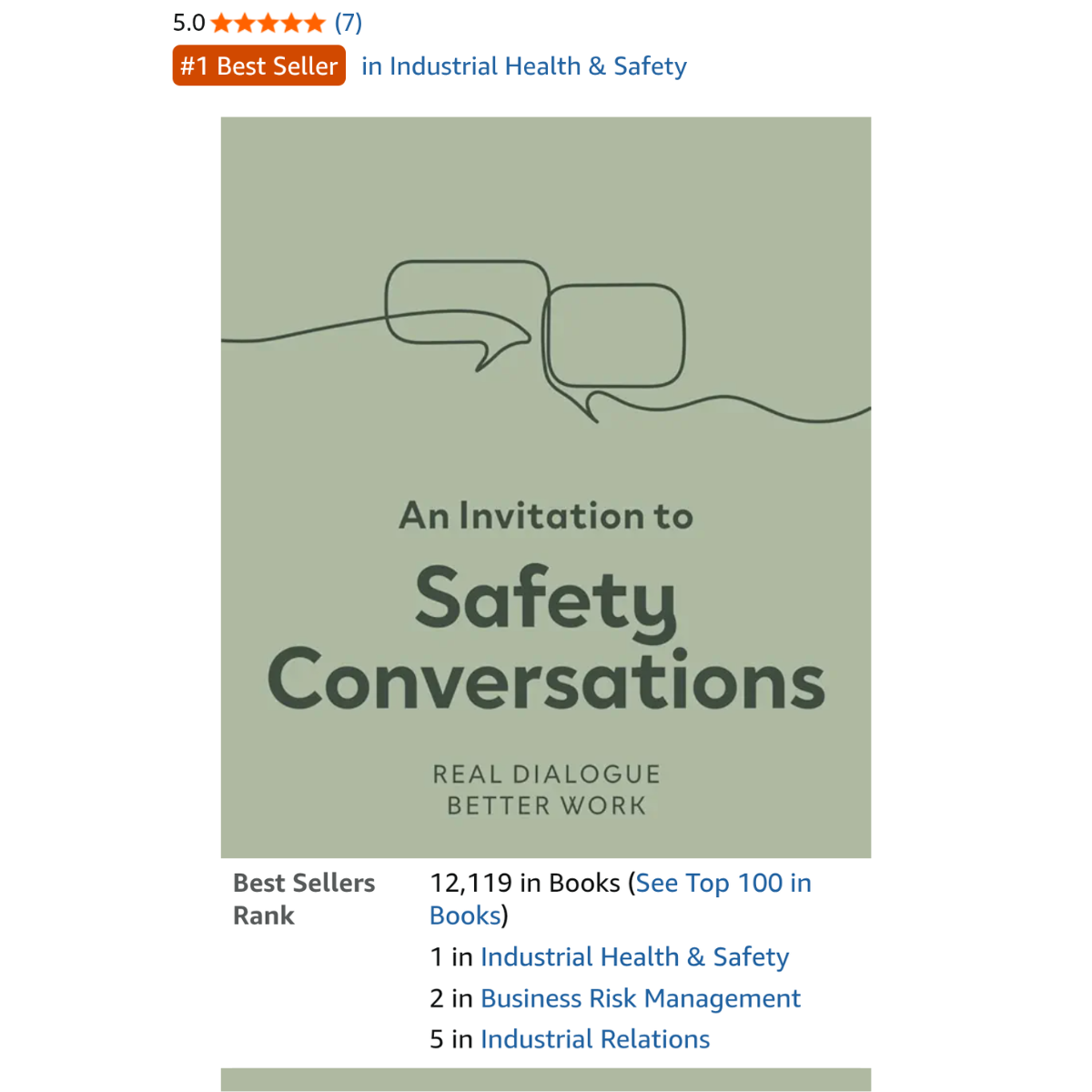
PS A huge thanks to all of you who've bought the book. I was extra chuffed last week when it hit the best-selling spot in industrial health and safety category on amazon.com.au - Thank you!